Large, mature trees can be one of the most beautiful features of a property. They provide shade, character, and a sense of permanence that is difficult to replace. But sometimes a large tree can also create concerns that homeowners don’t want to ignore.
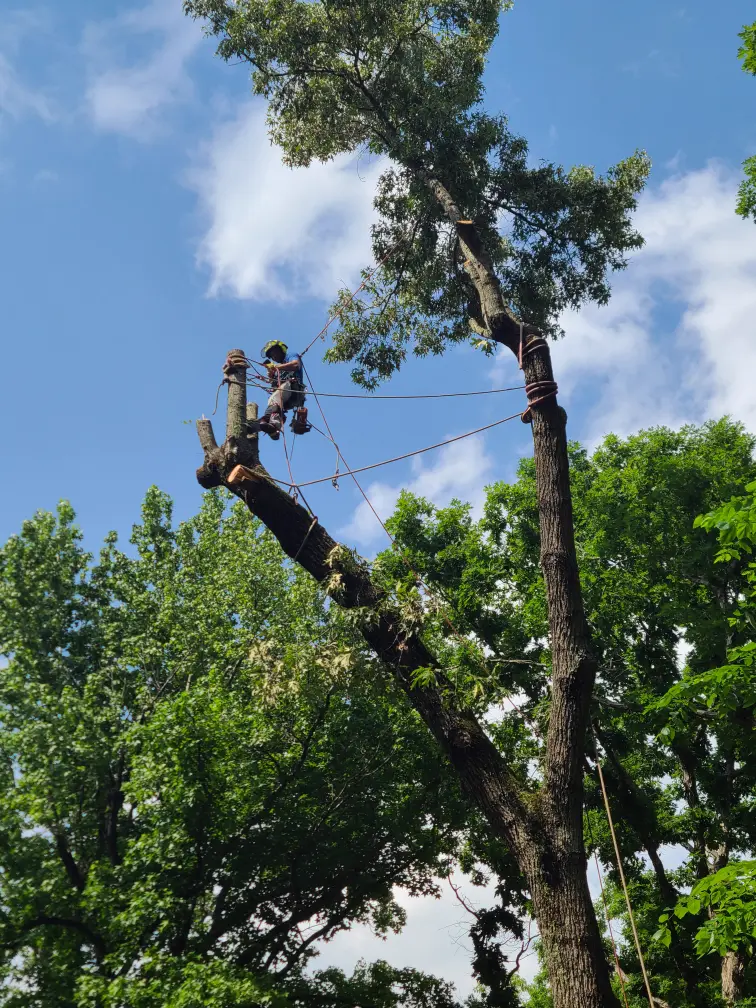
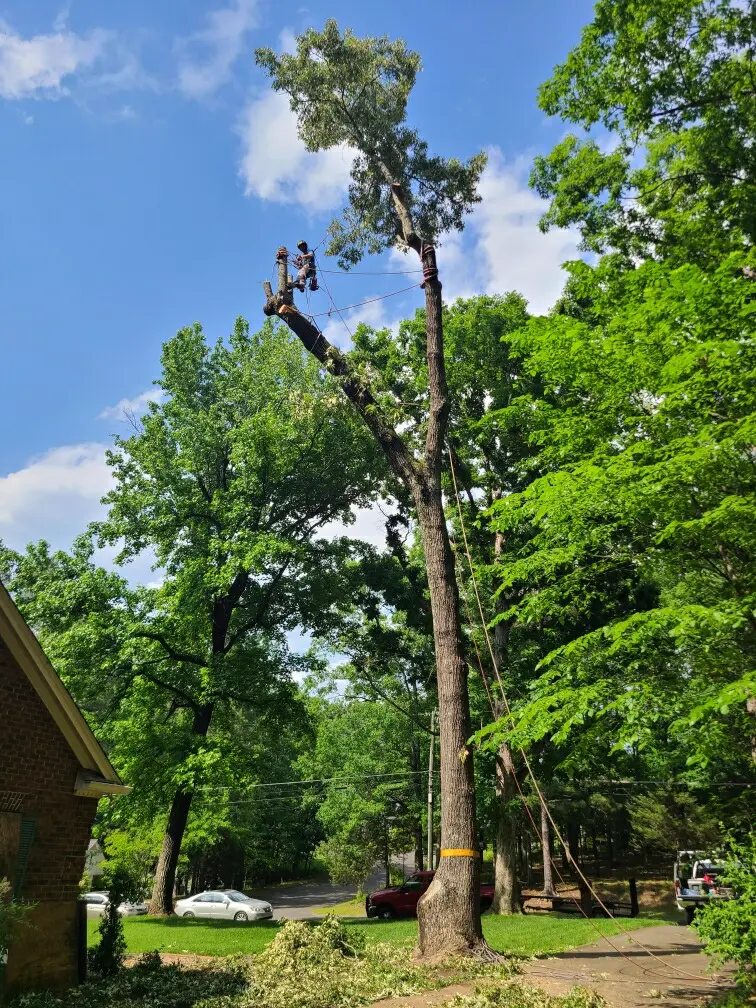
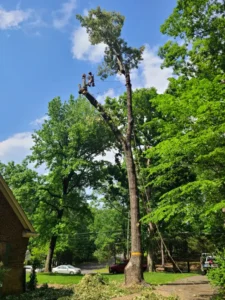
That was the case with this large red oak in Chapel Hill, NC. The tree had a co-dominant structure, significant decay at its base, and one very large lead that was leaning heavily toward the home. The homeowners had reached the point where they were tired of worrying about whether that lead could eventually break and cause damage.
The tree was also creating challenges for improvements they wanted to make to their property, including a new brick walkway.
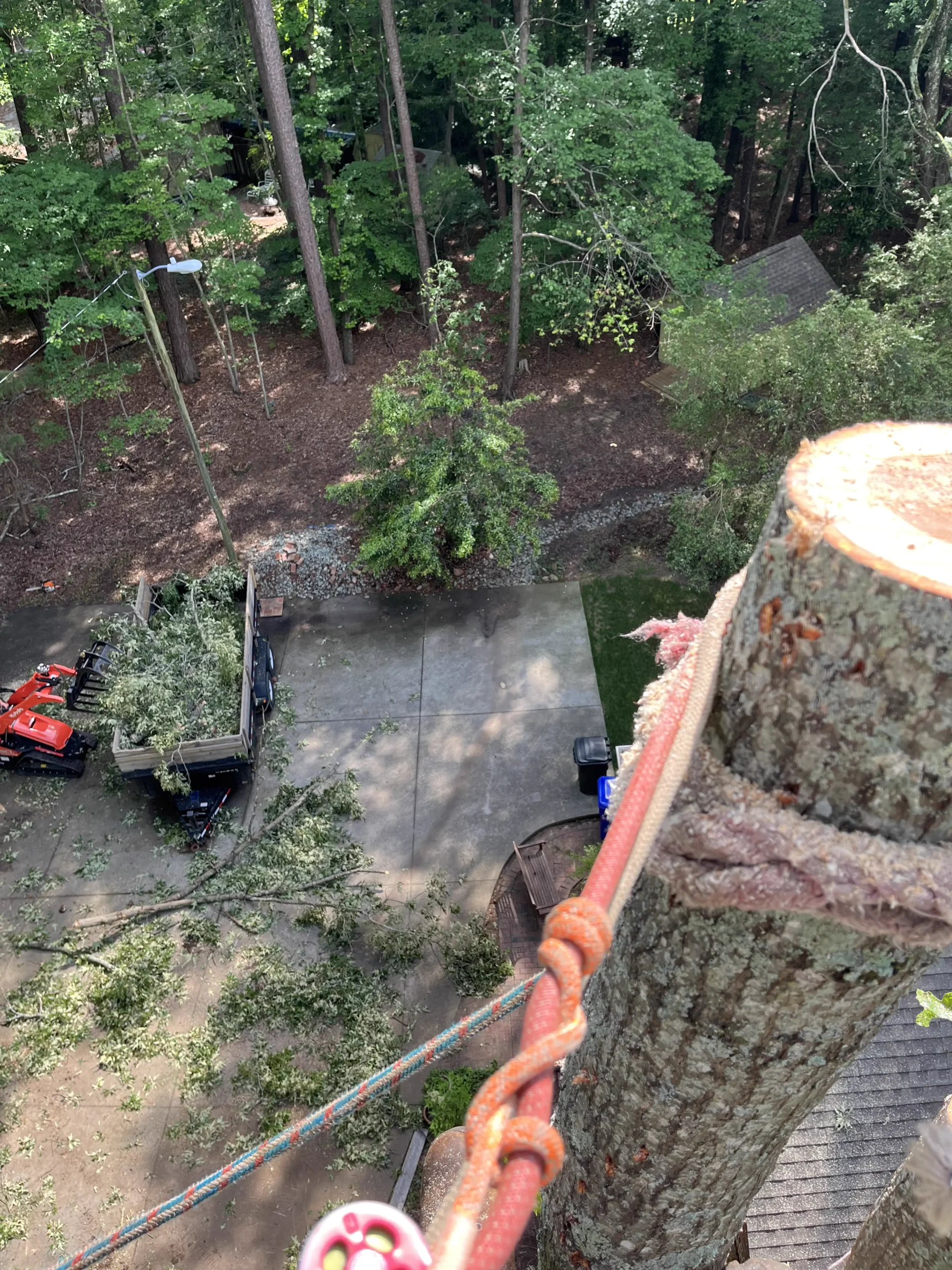
After evaluating the tree and the surrounding property, Tree Top Flyer Tree Service removed the red oak and ground the remaining stump to prepare the area for the planned walkway.
A Large Red Oak With a Significant Lean
 One of the primary concerns with this tree was its structure.
The red oak was co-dominant, meaning it had more than one major stem competing for dominance. One of those leads was particularly large and had developed a substantial lean directly over the house.
When a large portion of a tree extends over a home, homeowners understandably become concerned about what could happen if that section fails.
In this case, the homeowners had been living with that concern and didn’t want to continue wondering whether the large leaning lead might eventually break.
Removing the tree provided a way to eliminate that ongoing concern while also addressing several other issues that had developed around the property.
Significant Rot and a Hollow Base
The structural concerns weren’t limited to the tree’s upper canopy. There was also a significant amount of rot and hollowing at the base of the tree.
The base of a tree is particularly important to its overall structural stability because it is where the trunk transitions into the root system and anchors the tree to the ground.
Combined with the tree’s co-dominant structure and the large lead leaning toward the house, the decay at the base was another important factor in the decision to remove it.
This is a good example of why the overall condition and location of a tree matter when determining whether removal is appropriate. A large tree may look impressive and healthy from a distance, but problems with its structure or trunk can change the situation considerably.
Tree Roots Were Affecting the Property
The red oak was also creating problems below ground.
Its roots were beginning to extend into areas around the foundation of the home and the concrete driveway.
Tree roots are a normal and important part of a mature tree’s growth, but their location can become a concern when they begin interfering with structures, hardscaping, or planned improvements.
In this case, the homeowners were also hoping to install a new brick walkway, and the existing tree was in the way of that project.
Removing the tree allowed them to move forward with their plans for the property without having to design the new walkway around the existing tree.
Removing the Tree Made Room for a New Walkway
The planned brick walkway was an important part of the homeowners’ decision.
The tree was physically impeding the area where they wanted the new walkway to go, and the root system was already affecting the surrounding concrete.
Once the red oak was removed, Tree Top Flyer also ground the stump, clearing the area for the future walkway installation.
Although we don’t have photos of the stump grinding portion of this project, stump removal was an important part of preparing the area for the homeowners’ next phase of the project.
The result wasn’t simply a cleared space. It gave the homeowners the opportunity to move forward with an improvement they had wanted for their property while eliminating the concerns associated with the existing tree.
When Should You Consider Removing a Large Tree?
Not every large tree needs to be removed. Mature trees provide tremendous value to a property, and removal shouldn’t be the automatic solution whenever a tree has a structural issue.
However, there are situations where removal may be the appropriate choice.
Homeowners should consider having a tree professionally evaluated when they notice concerns such as:
- A significant or worsening lean
- Large co-dominant stems
- Visible decay or hollow areas
- Major cracks or structural defects
- Dead or declining portions of the tree
- Large limbs extending over a home or other structures
- Roots interfering with structures or hardscaping
- A tree that is preventing planned construction or landscaping improvements
The location of the tree matters just as much as the tree itself. A structural problem in a tree located far from homes, driveways, and other structures presents a very different situation than a similar tree growing directly over a house.
Professional Tree Removal in Chapel Hill
Removing a large tree near a home requires careful planning. The size of the tree, its lean, surrounding structures, access to the property, and the location of the remaining stump all need to be considered before work begins.
For this Chapel Hill project, removing the large red oak addressed several concerns at once: the heavily leaning co-dominant lead, decay at the base, roots affecting the property, and the obstruction created by the tree for the homeowners’ planned brick walkway.
Once the tree was removed and the stump was ground, the homeowners had a clean area where they could move forward with their next project.
If you have a large, leaning, damaged, or declining tree in Chapel Hill, NC, Tree Top Flyer Tree Service can evaluate the situation and help determine the appropriate next step.
Contact Tree Top Flyer Tree Service for professional tree removal, tree trimming, stump grinding, and other tree services throughout Chapel Hill, Carrboro, Durham, Pittsboro, Hillsborough, and surrounding areas.